


Farms, ranches, the country, and the wilderness are places of refuge for me. They’re places where I feel incredibly comfortable. But as I’ve traveled, and come to see the impact of domestication on animals in these places, my own domestication speaks to me too.

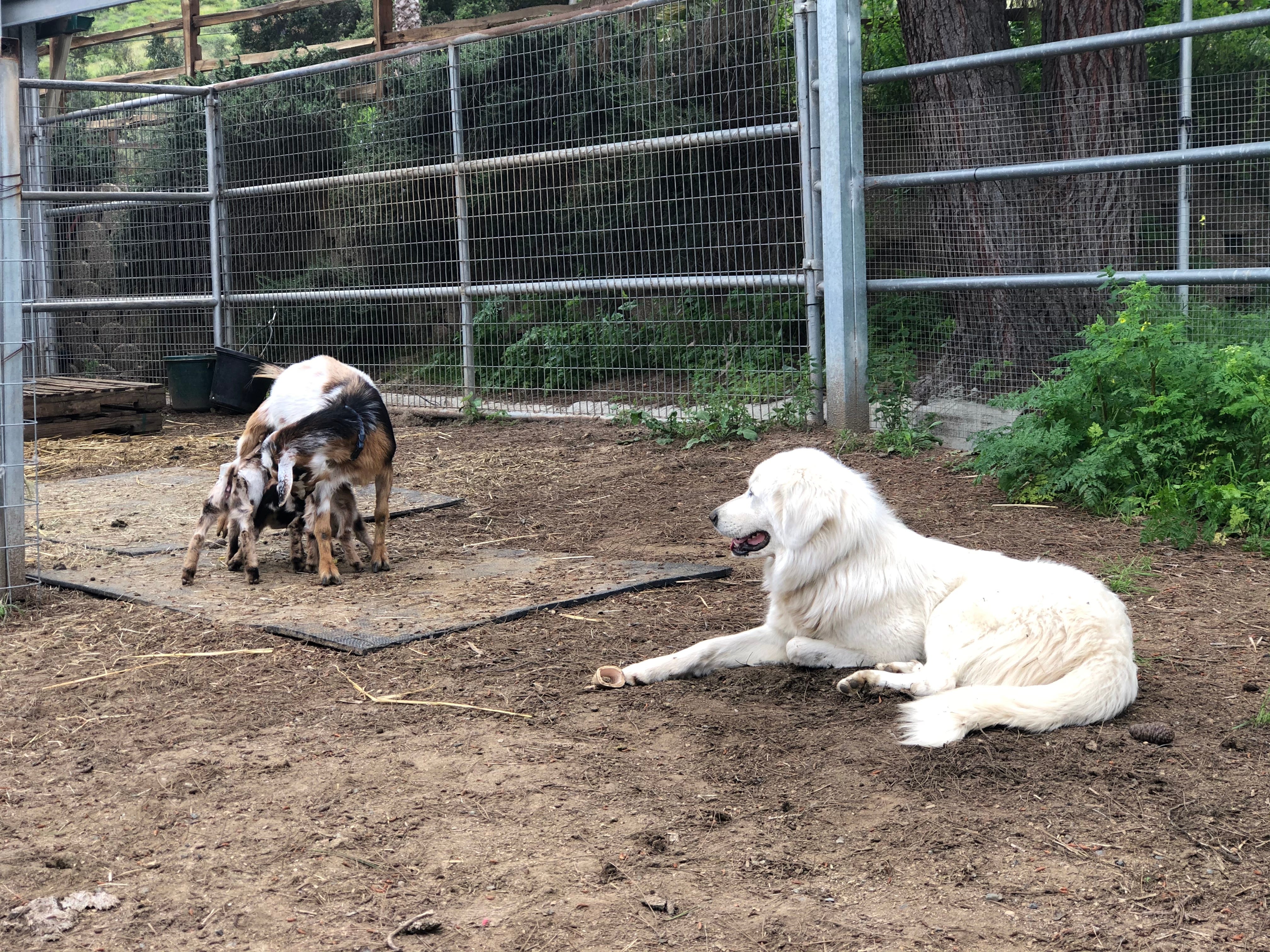
Northeast of San Diego, California and not too far from an American military base, is SoCal ranch land. Although hilly, it reminds me of the Plains in my home state of Texas. Horses in backyards. Pigs in cages. Goats with their watchdog. And the people that rear them.
Nomadic, I’d made my way down to this land just a day before the pandemic lockdown was issued in Northern California in March 2020. I’d been staying in the area for a month (my so-called effort to outrun Covid) when I found an Airbnb that gave me an entire guest house on ranch land for a steal of a price.
It came with farm fresh eggs delivered to my front door-step in a tiny basket every couple of days. Desalinated water that was a tinge brown. And a too cute and too affectionate golden-brown, short-haired, Chihuahua that scared me*.
Overbred and abandoned, Chihuahuas are the second most euthanized breed of dog in the United States. Although tiny, I’d experienced their aggressive barking, teeth-flashing growls, and standoffish behavior towards strangers in the past.
But with the reassurance from my host, I scooped up the little guy and took him with me for a few adventures around the ranch land.
(*I’m so sad I don’t have a photo of the little Chihuahua for you.)
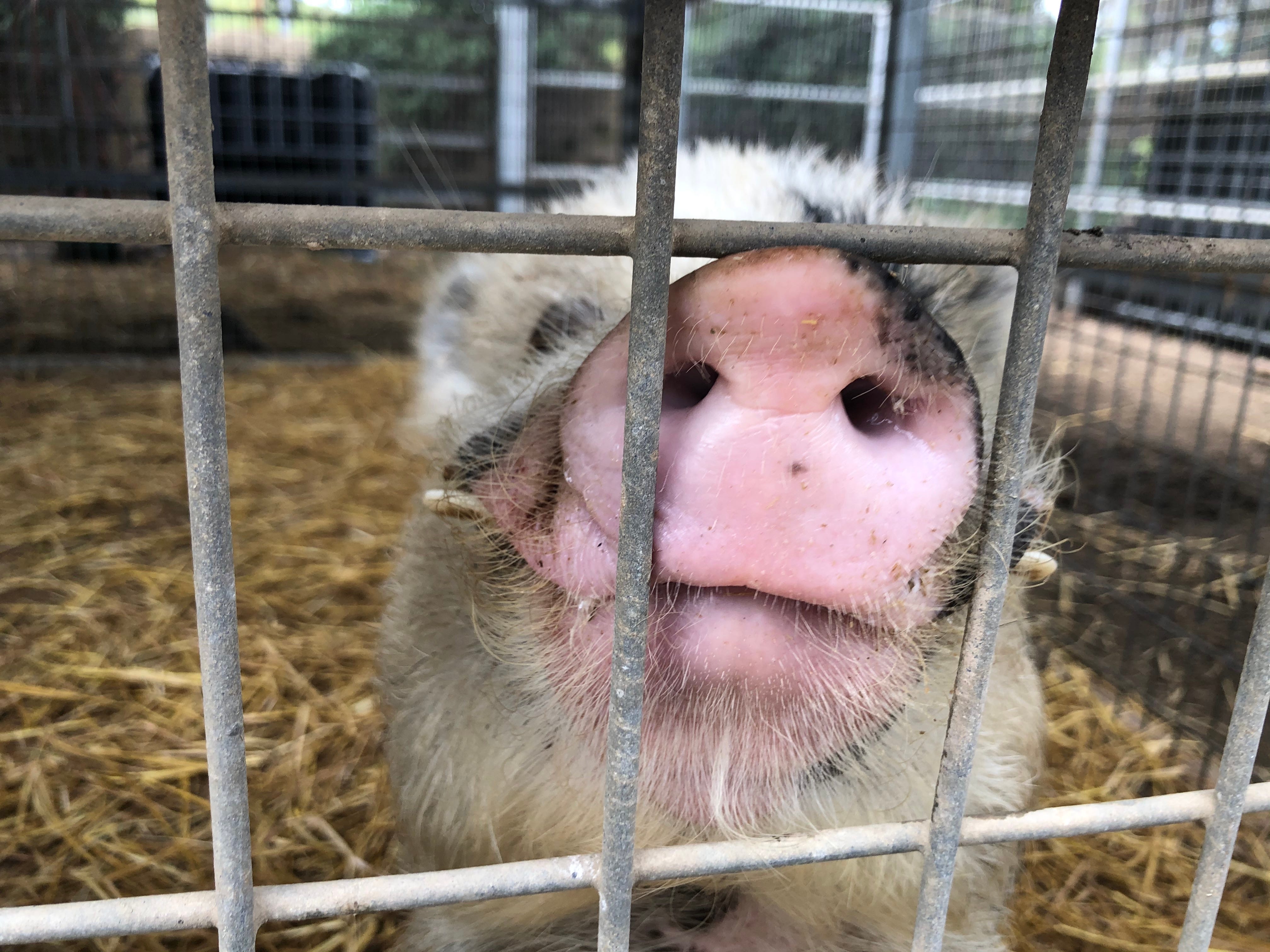
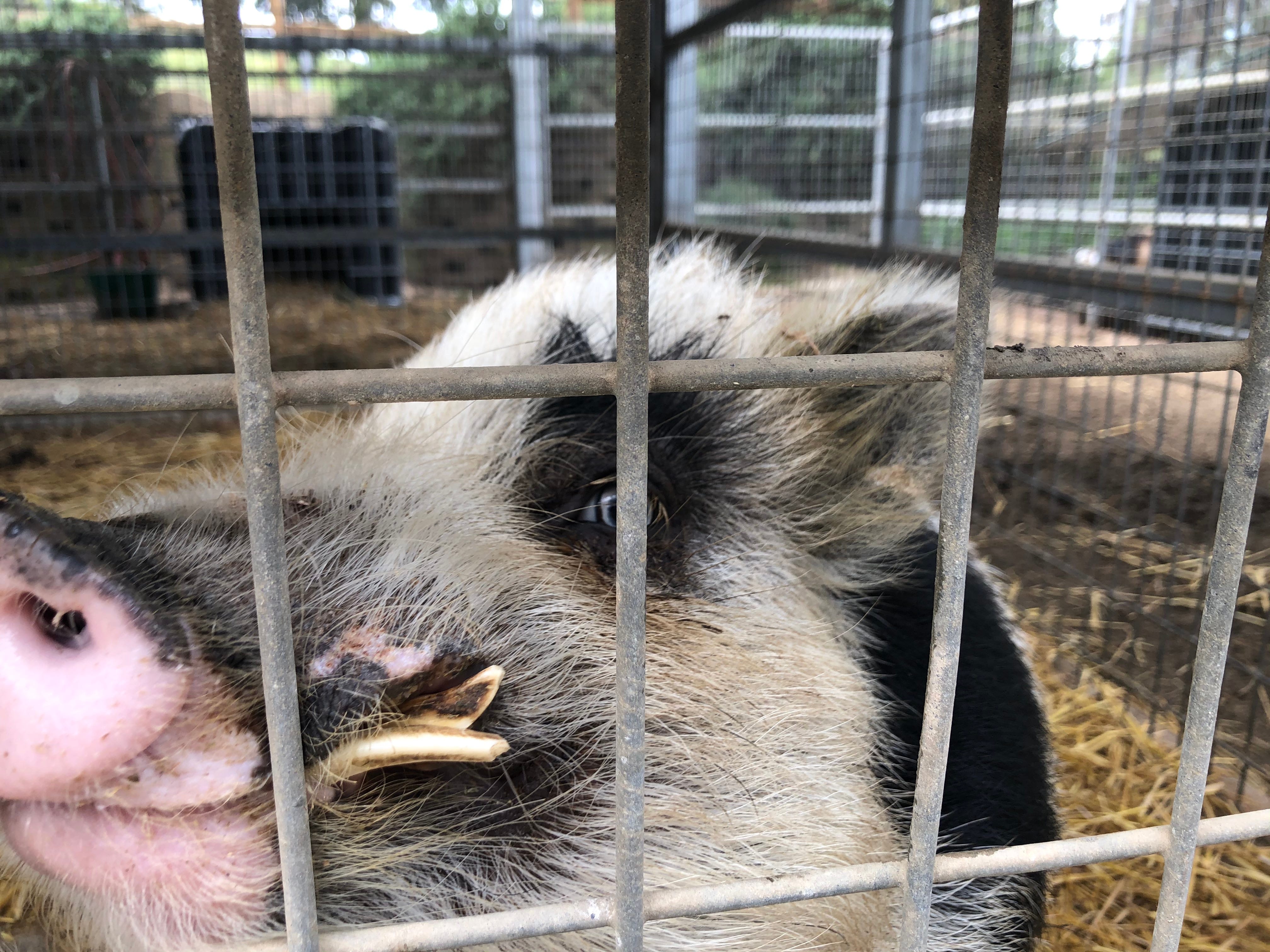
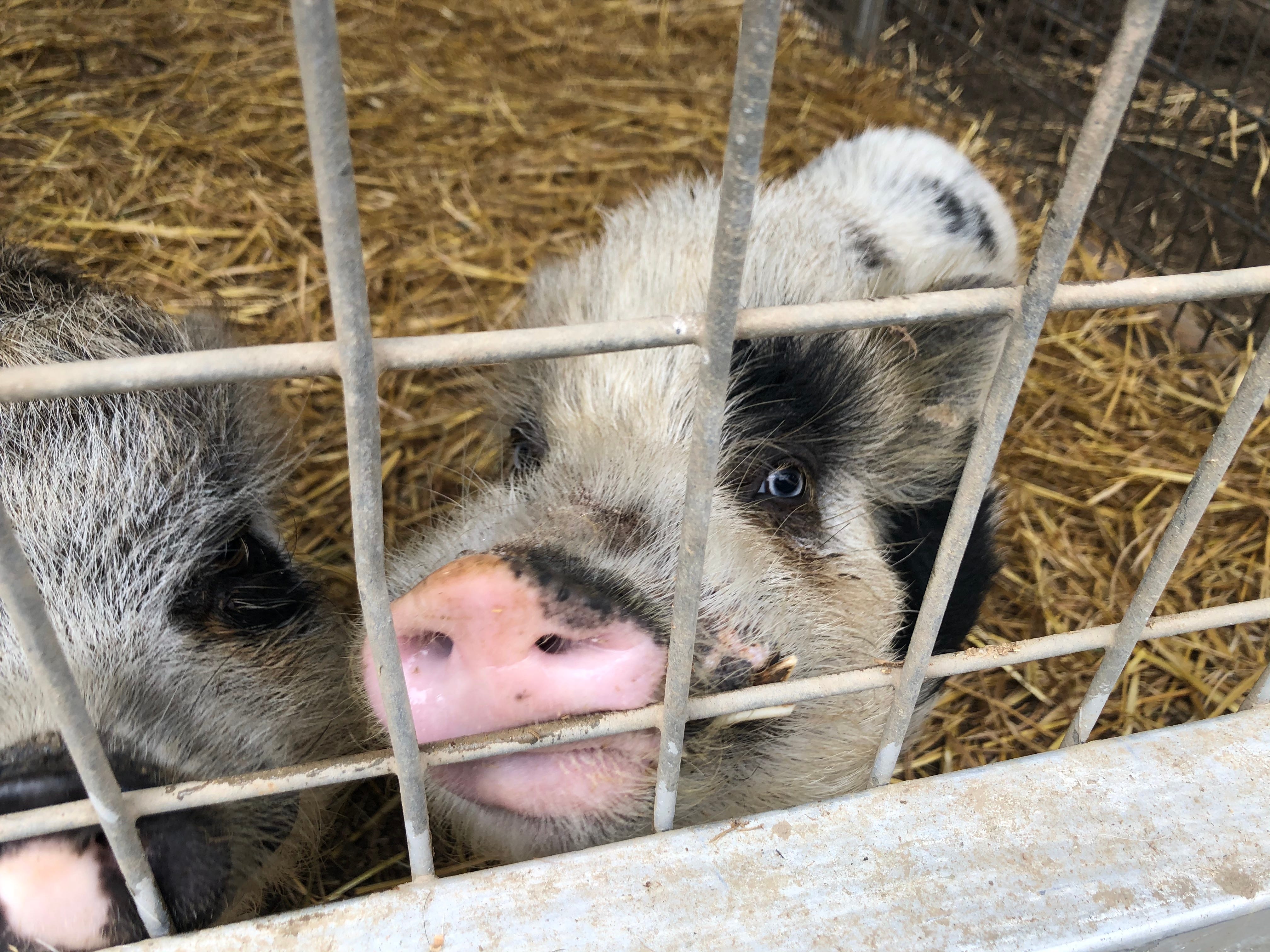
The pigs were especially eager to catch a whiff of us. I let them.
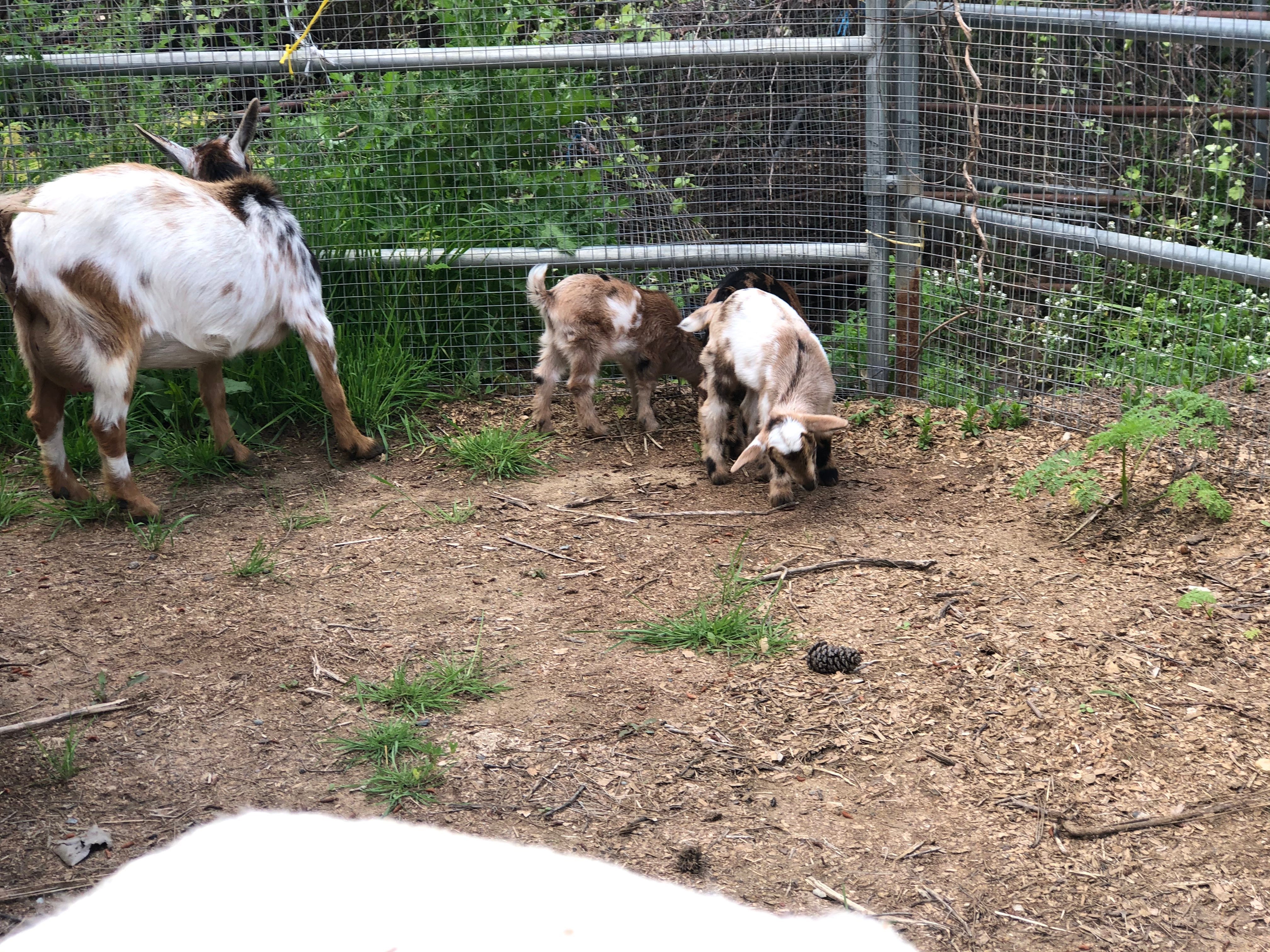
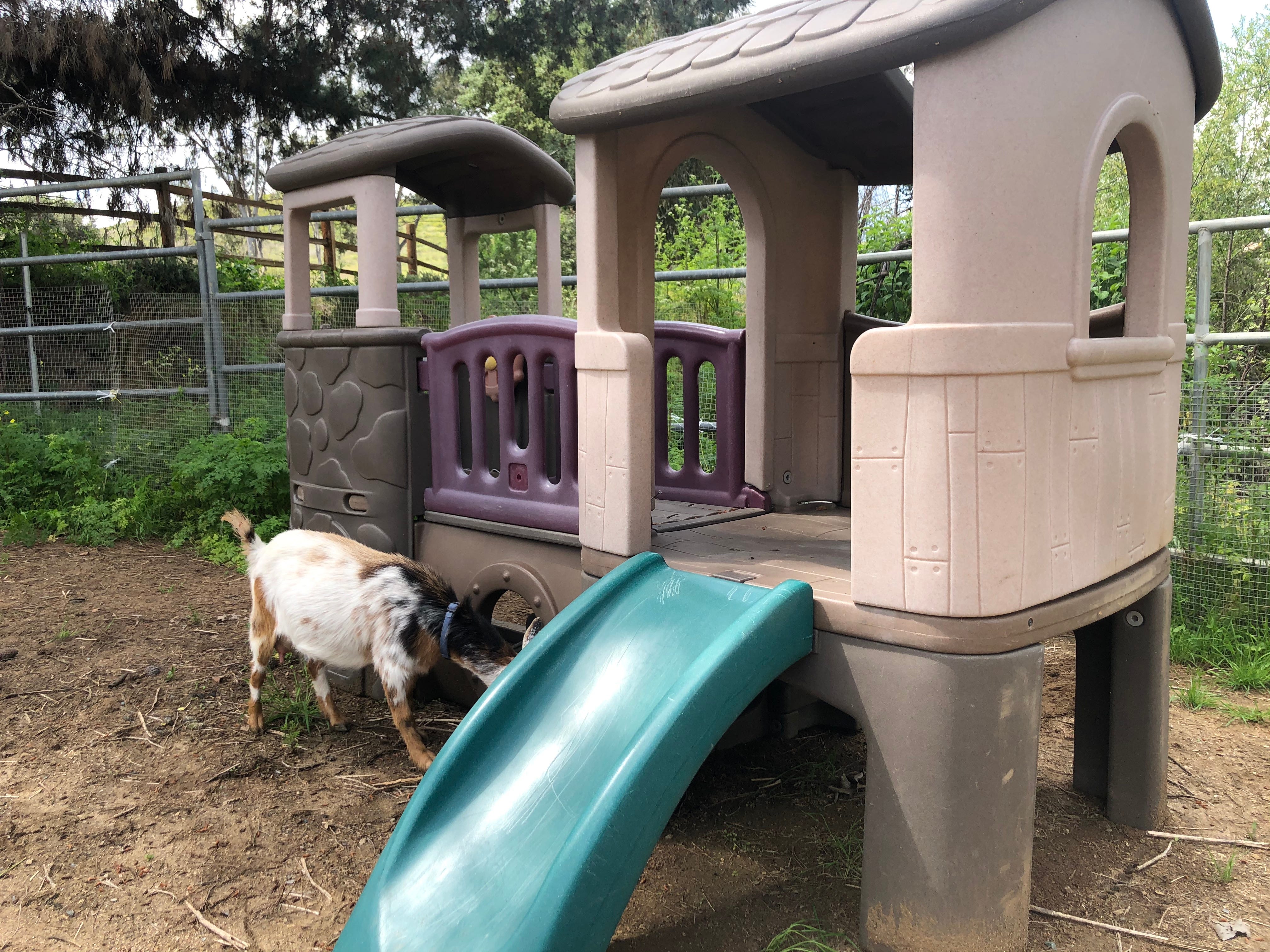
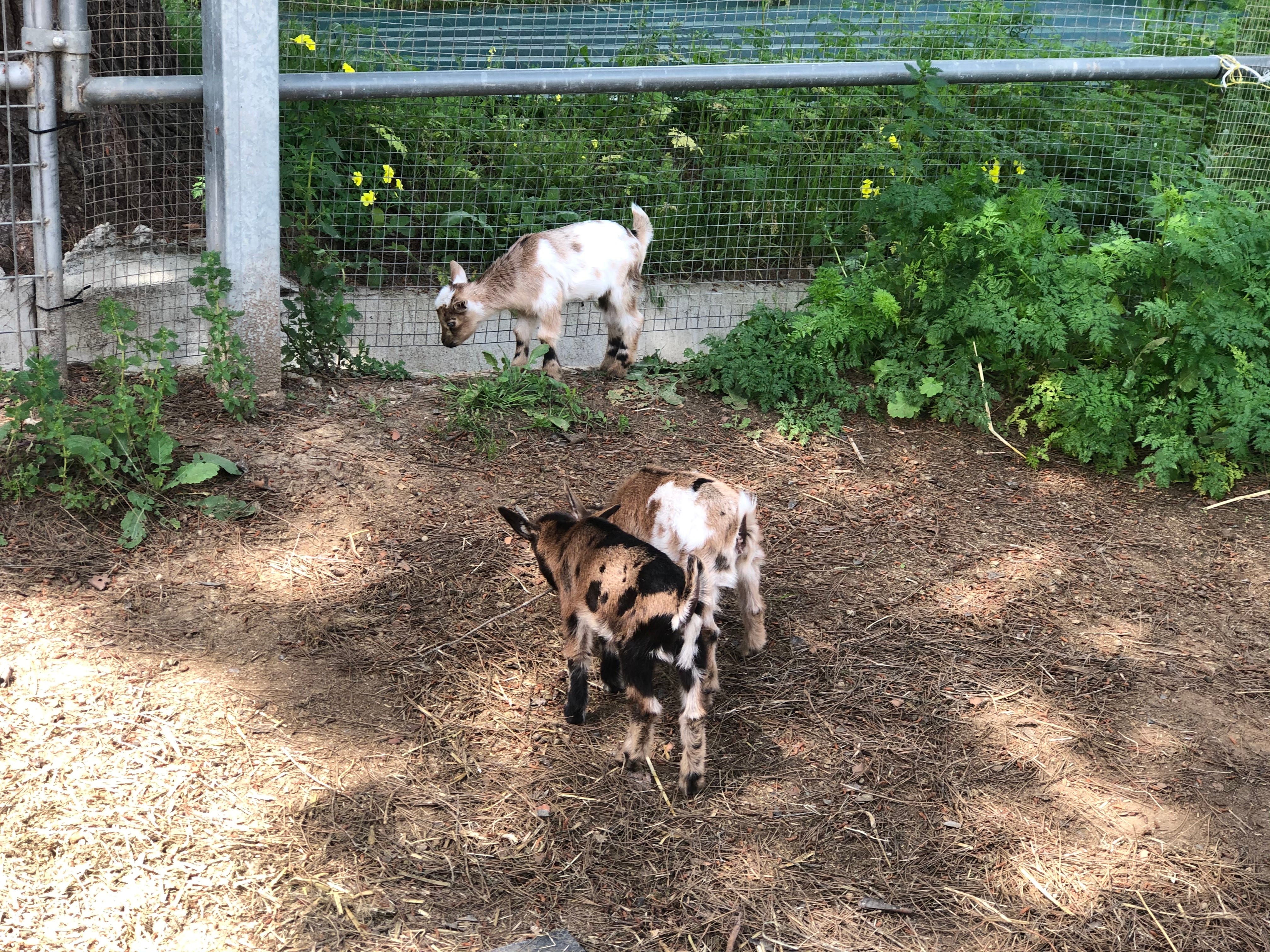
But what caught me by surprise were the goat kids and their mother.
Friendly, and without fear the kids paraded around, sniffed and inquired about who I was in the way that animals do. Then they skipped or whatever it is that goats do, back to their mother.
At the halfway point of my month long stay I left the ranch and I went to visit the friendly hosts from a prior Airbnb to do some laundry. I returned to the guest house ranch the next day.
Although, when the time to visit the baby goats opened up again, I noticed the sign, Petting Zoo Coming Soon. In their gated area the goats behaved differently with me. Skittish, they backed far away. I began to worry that maybe I’d put on some scented lotion or deodorant that aggravated them. Either way, they confused me until I finally saw the cause of their behavior.
Fused at the top of their skulls, and above their eye sockets were metallic circles above the two spots where their horns were to grow. They’d been disbudded. It’s a process that is often touted as the right thing to do for the purpose of ensuring the goat is safe.
In the wild, a goats’ blood-vessel filled horns give it protection. In captivity, a goat’s horns can get caught in fences, which can lead to choking or other suffering. If you’re making a community petting zoo, you don’t want your goats goring other goats, children, or adults.
But, disbudding is an ongoing ethical debate because it’s not painless for a few days old goat kid. The procedure calls for the kids to be fastened into a wooden box so they can’t move or back away. Heat rods are then directly applied to the top of kids’ heads, and if done improperly the heat can penetrate, causing permanent brain damage.
Watching these skittish goat kids left me filled with the feeling of an unexplainable sadness. These are the confines of the world they are born into.

Lately, I’ve been pondering on what the domestication of womanhood has meant for women, and specifically, myself. I’ve wondered how far detached I am from my most wild self and what the implications are for living out a life in this way.
In her 1949 work The Second Sex, French philosopher and feminist activist, Simone de Beauvoir posited, who is a woman before she was made (by the culture)? Today, author, educator, and depth psychotherapist Dr. Stacey Shelby is driven by the nearly one-hundred year old question that seems to make itself known in women at a specific time in their lives. She writes:
By midlife, a woman may have become conscious of some of the ways culture has over-domesticated her and she may have become aware of her own wild instinctual animal nature.
Midlife refers to thirty-five year olds in Carl Jung speak. Although Shelby extends the timespan in both directions for our modern era. Everyone’s midlife point is different though.
And this is where I am. My Wild wants her horns — her tail, and her rage to spill over. I’m now alert to what has crept up in the recesses of my own psyche. Alert to the gifts that were domesticated out of me, and the life that has been subjected to that grand force of domination.
On the path of individuation, getting out from underneath domination is wholly important. Shelby details the risk that awaits women who are unable to do so, the possession — in a state of unawares and overcome by instinctual desire:
…if women are not allowed to express their wildness, it can show up in the forms of compulsions and obsessions…a woman might become obsessed with a man…The compulsive behaviors may grab hold of a woman and erupt out of her: perhaps as a shopping spree, a bottle of wine, a joint, an eating binge… [Tracking the Wild Woman Archetype]
There is some grace in knowing that my Wild is still somewhat retrievable. But access to my Wild Woman is not a simple notion of think, believe, and poof. To reclaim her requires reverence for her power and that I take on a very specific type of psycho-spiritual journey, the descent (Greek | κατάβασις or Katabasis, the descent into the underworld within), a notion that once alluded me but that’s even clearer these days.
When I have ever descended across my lifetime it has been experienced unconsciously as a felt sadness for a period of time. As of late, the descent is consciously felt. I get a window into the experience through vivid dreams — I descend into a basement:
All of my gnarly emotions are therein, and it is entirely frightening to meet the parts of me that I don’t often dance with. Attention deprived, I hope they’re sleeping. I don’t want to wake them, but I know they’ll get out of their beds to greet me. I’ll tell them I’m not staying for long, but they’ll ensure that I stay, and they’ll let me feel what I keep running from until I really see what it is they want to show me.
The descent can feel like emotional torture — clouds of sadness and fear and worry. I can feel Wild Woman yanking me to wake up to her, and to understand what’s she’s been trying to show me.
But the descent can also feel like swimming to the bottom of the ocean on one breath. And when that oxygen runs out a walk outside under the sun, or a visit to the river, or an extremely good cup (or three) of matcha is needed to surface me back for a breath. And if the work’s not over I hold my breath and go deep down again to feel it all again and to commune with what’s not permitted to be in the social surfaces of the day to day.
It hurts.
I cry.
But I want more to know my Wild self.

Thank you so much for reading. Many thanks to the Foster writer collective for its writing container, writing circles, editing, and so many other beautiful writer resources.
In our modern world turning to a spiritual journey is a sacred rite of passage with an infinite number of paths to explore. Being well-prepared before embarking on this journey is what I wish I had been equipped with so long ago. If the idea of being well-prepared for your spiritual journey resonates with you, then I invite you to join the waitlist for my upcoming course. The nature of your role in the universe is not to be underestimated.
🧁 Thank you for reading Icing on the Cake. In addition to subscribing, you can support voices in culture work and psycho-spirituality with a one-time donation/tip here. With your generosity I can continue delivering thoughtful and independent essays and stories.
Wow. The image of the baby goats being debudded is so powerful and heartbreaking. Thinking a lot about similar journeys lately. May we meet our wild selves with courage and grace. ❤️